Storm Damage in Ingalls, IN
Ceiling cavities and attics in Ingalls dried without guesswork, verified against baseline readings in your own house
When Ingalls homeowners need Storm Damage, Ingalls Water Restoration responds 24/7 with certified technicians, fast equipment deployment, and claim ready documentation. Call (765) 508-0821 for immediate dispatch.
- Service: Storm Damage for Ingalls homeowners
- Service area: Ingalls, IN and surrounding areas
- Response time: Fast local response for Ingalls; live dispatch every hour of the year
- Licensed and insured (License #RC21100059)
- Serving Ingalls, IN since 2018
Storm Damage Cleanup in Ingalls
We handle storm damage cleanup across Ingalls, from tarping the opening to drying the house underneath it, and we're out day or night.
Storms Here
Severe thunderstorms come through in spring and summer. Storms here can also bring large hail and damaging wind. If your insurance company asks for a storm date, NWS Indianapolis keeps a list of past events.
Where Storm Water Ends Up
Homes near Fall Creek can see rising water after heavy rain. With full basements common here, a big storm can bring water in from below as well as through the roof. That makes it a basement flooding job too.
After a storm we can be anywhere in Ingalls, from Summerlake to the roads around South Meridian Street and Dollar General on West Broadway Street. Nearby, we also dry out storm damage in Pendleton, Anderson, Fishers and Noblesville.
Expert Storm Damage for Ingalls Homeowners
Water that got into the roof assembly during a hard freeze doesn't show itself until the thaw, and then it shows up all at once. Ice in the deck and in the insulation melts, the drywall below takes all of it, and a ceiling that looked fine for a week starts to sag. Ingalls Water Restoration dispatches to storm and freeze damage calls in Ingalls, IN within 2 hours with meters that read what the cavity is holding and the equipment to dry it.
The IICRC S500 sorts water into three categories by contamination level, and water can move into a worse category the longer it sits. Ingalls Water Restoration assesses the source and what the water touched on the first visit in Ingalls, then rechecks as the job runs, so the plan matches the water in the house today.
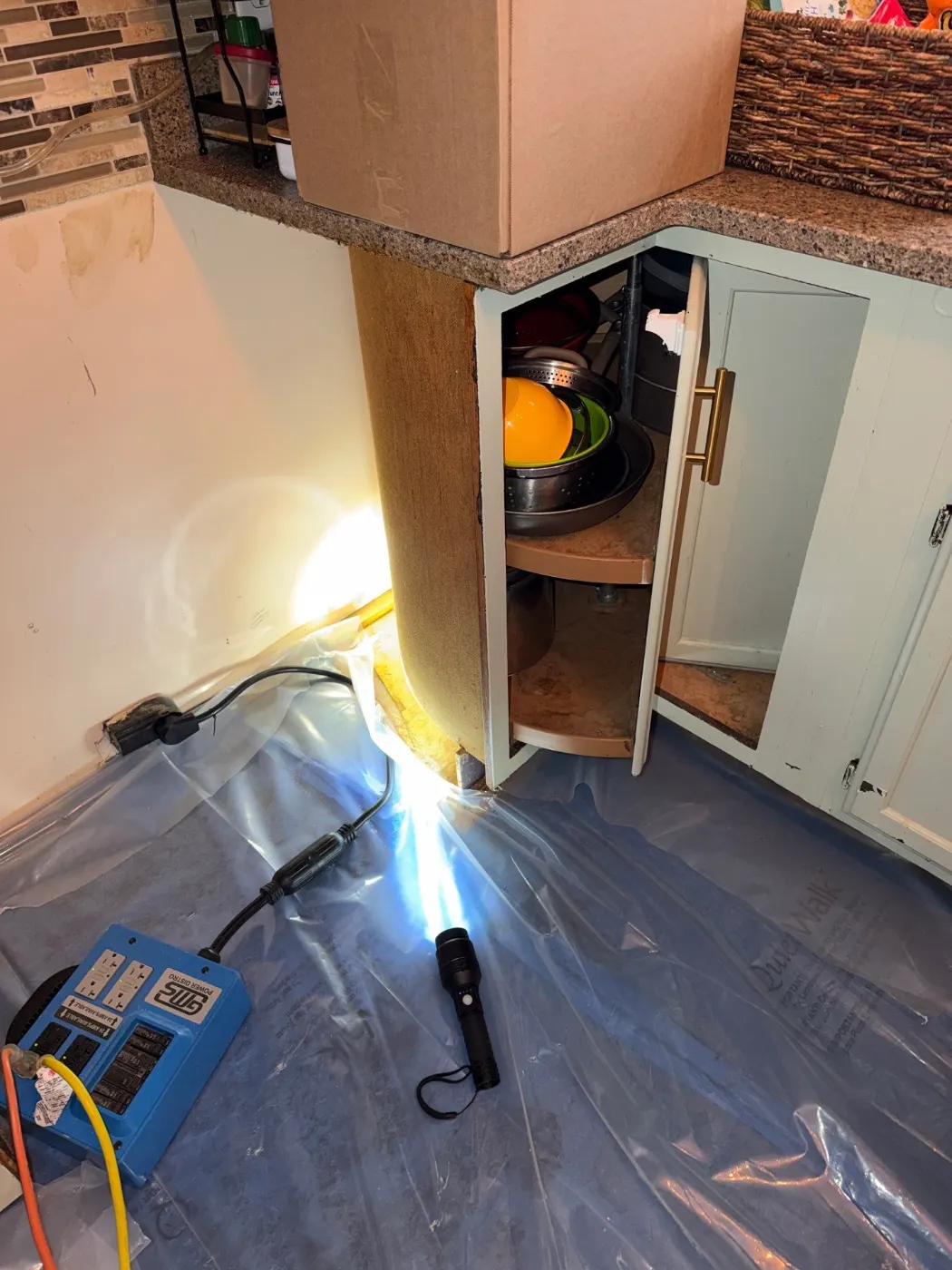
Mapping comes before cutting. Technicians walk every room under and beside the intrusion with a thermal camera to find the temperature differences wet material creates, then confirm with penetrating and pinless meters on drywall, framing, flooring and insulation. Readings get taken in unaffected rooms too, because those become the baseline that defines dry for your particular house. The map's what decides which surfaces get opened and which ones stay closed.
Your deductible is printed on your policy's declarations page, and knowing the number helps you decide whether a claim makes sense. Ingalls Water Restoration builds the scope from measurements, so the size of the loss in your Ingalls home is on paper before you choose. The decision to file, and what gets paid, rest with you and your insurance company.
Storm damage calls in Ingalls, IN get answered by Ingalls Water Restoration any day of the week, holidays included. Bring us in while the water's still moving and the scope stays small. The moisture readings come to you in writing.
Signs You Need Storm Damage Restoration
If you notice any of these in your Ingalls home, schedule a free inspection before the issue worsens.
Mud film on a basement floor once the water has drained away
Water on the basement floor after the power failed and the sump pump stopped
A wet soffit or ceiling corner on a covered porch after wind pushed rain up under the eave
Clothes or boxes against an outside wall that feel damp after wind driven rain
Damp, earthy air when you open the attic hatch or pull the attic ladder down
Water seeping in at the floor and wall joint during heavy rain
Shingle granules piled in the gutters or washed out at the bottom of a downspout
Wallpaper seams lifting or paint peeling at the baseboard after a storm
Dark water line on basement drywall several inches above the floor
Hardwood boards cupping near a patio door or garage entry
How Ingalls Water Restoration Handles Storm Damage
We follow these steps in order on every Ingalls job.
Contents Protection
Furniture legs get blocked off wet flooring and small items move out of the water's reach, with photos taken of anything that shifts. Rugs and boxes in a flooded basement come up off the floor before extraction starts.
Cleaning Surfaces That Stay
Framing and hard surfaces that stay get cleaned and treated with an antimicrobial once the soaked material is out. Cleaning comes before the drying equipment goes in, so the air movers aren't pushing soil around the room.
Drying Equipment Setup
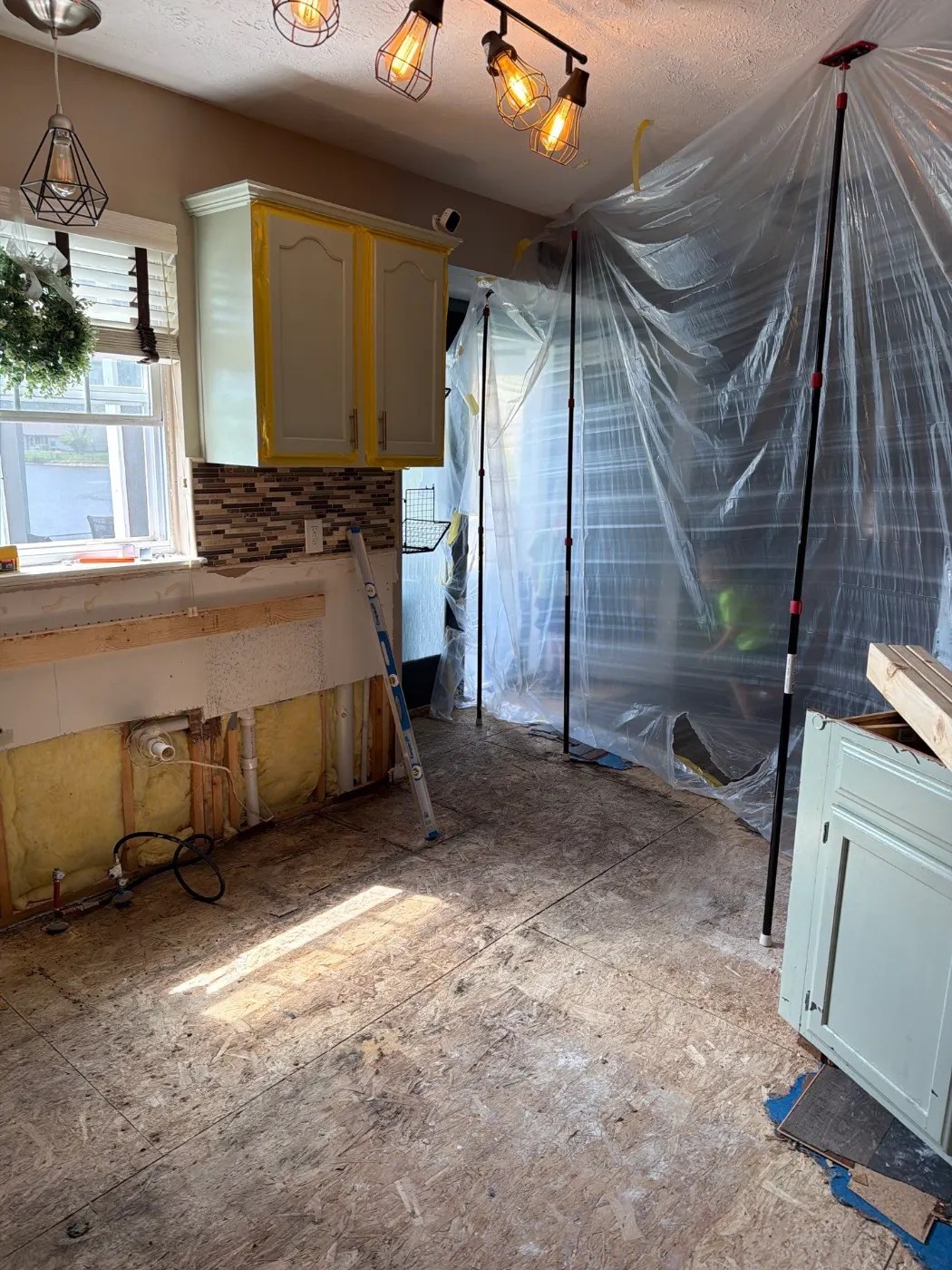
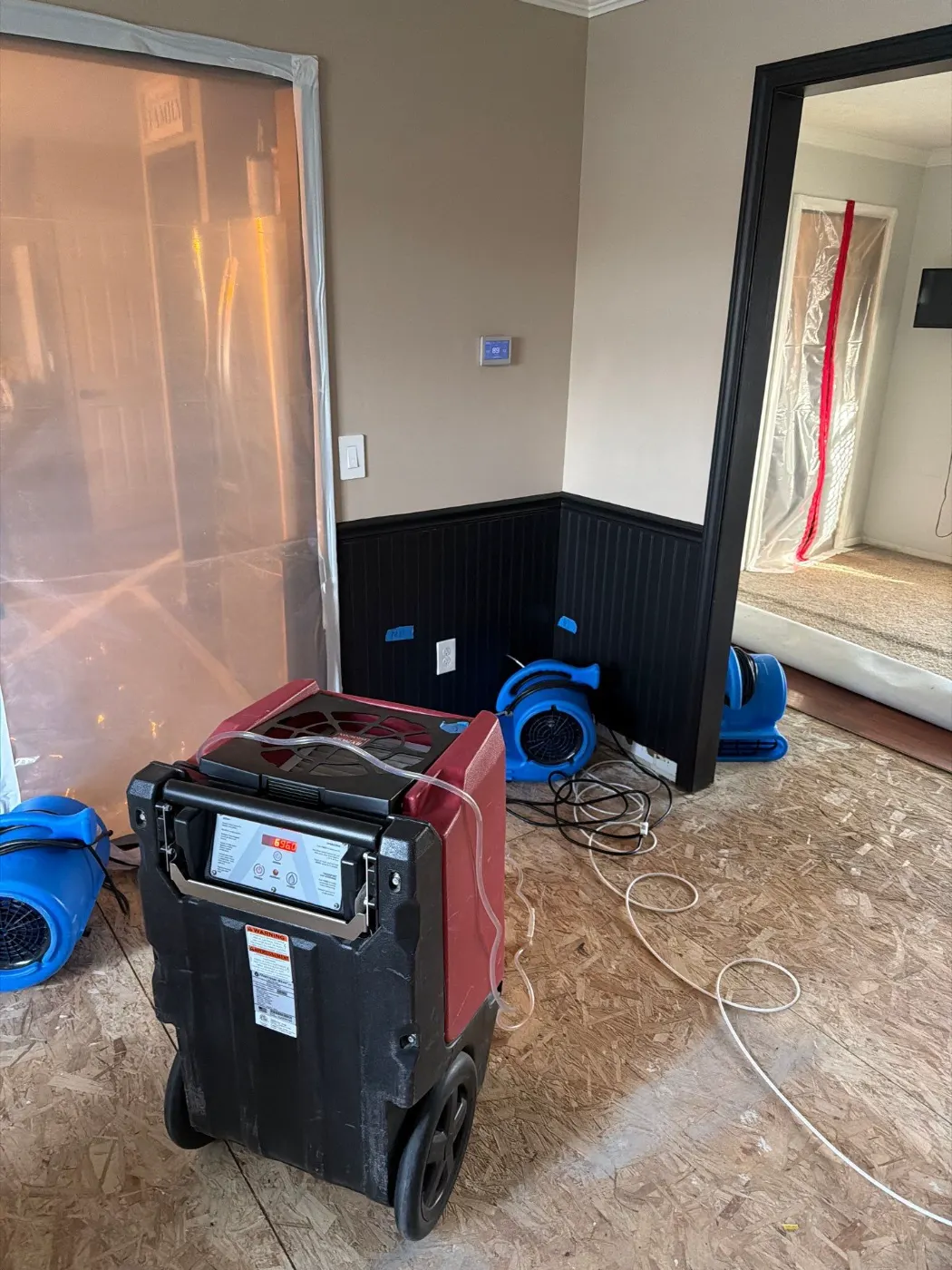
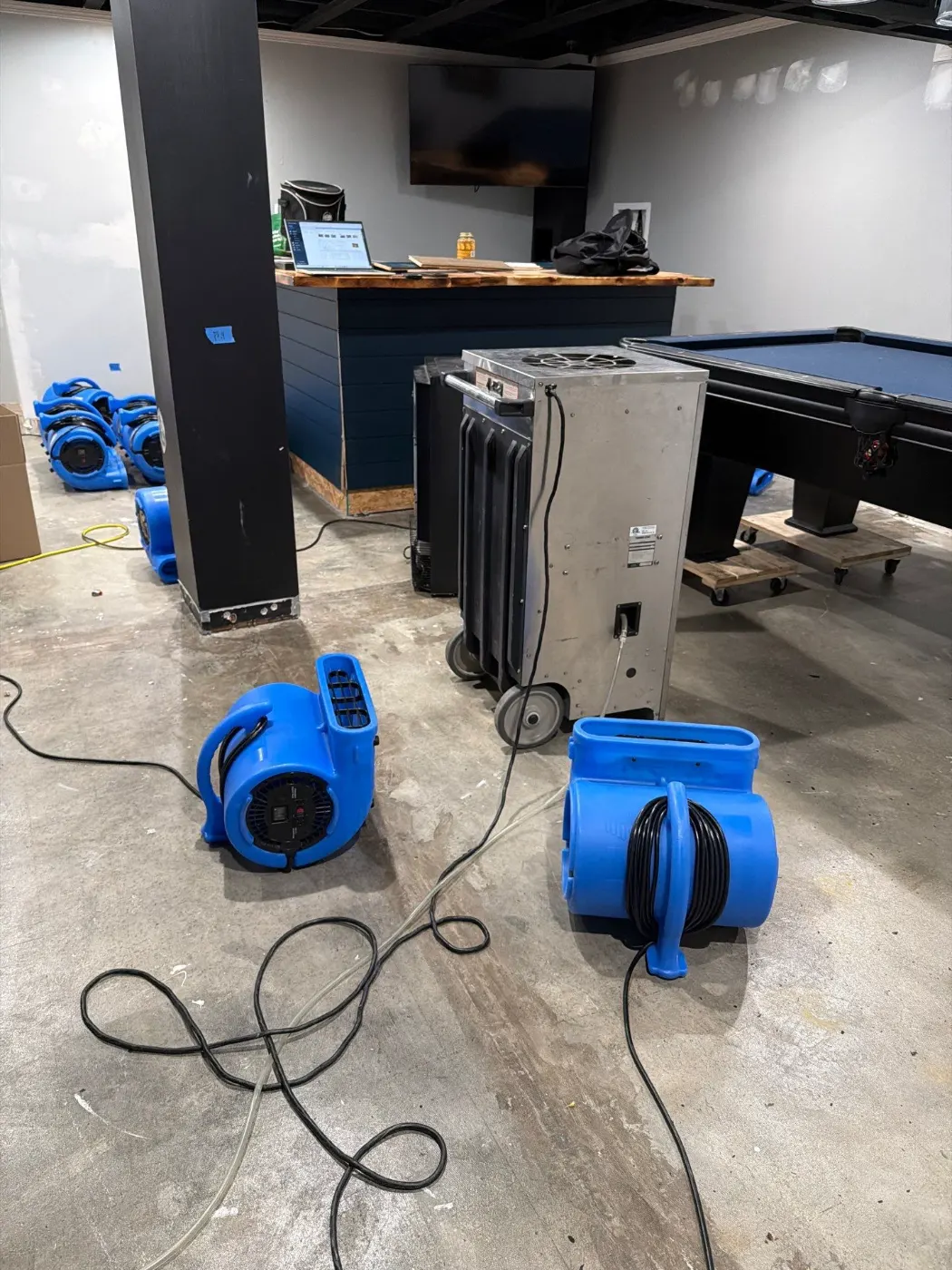
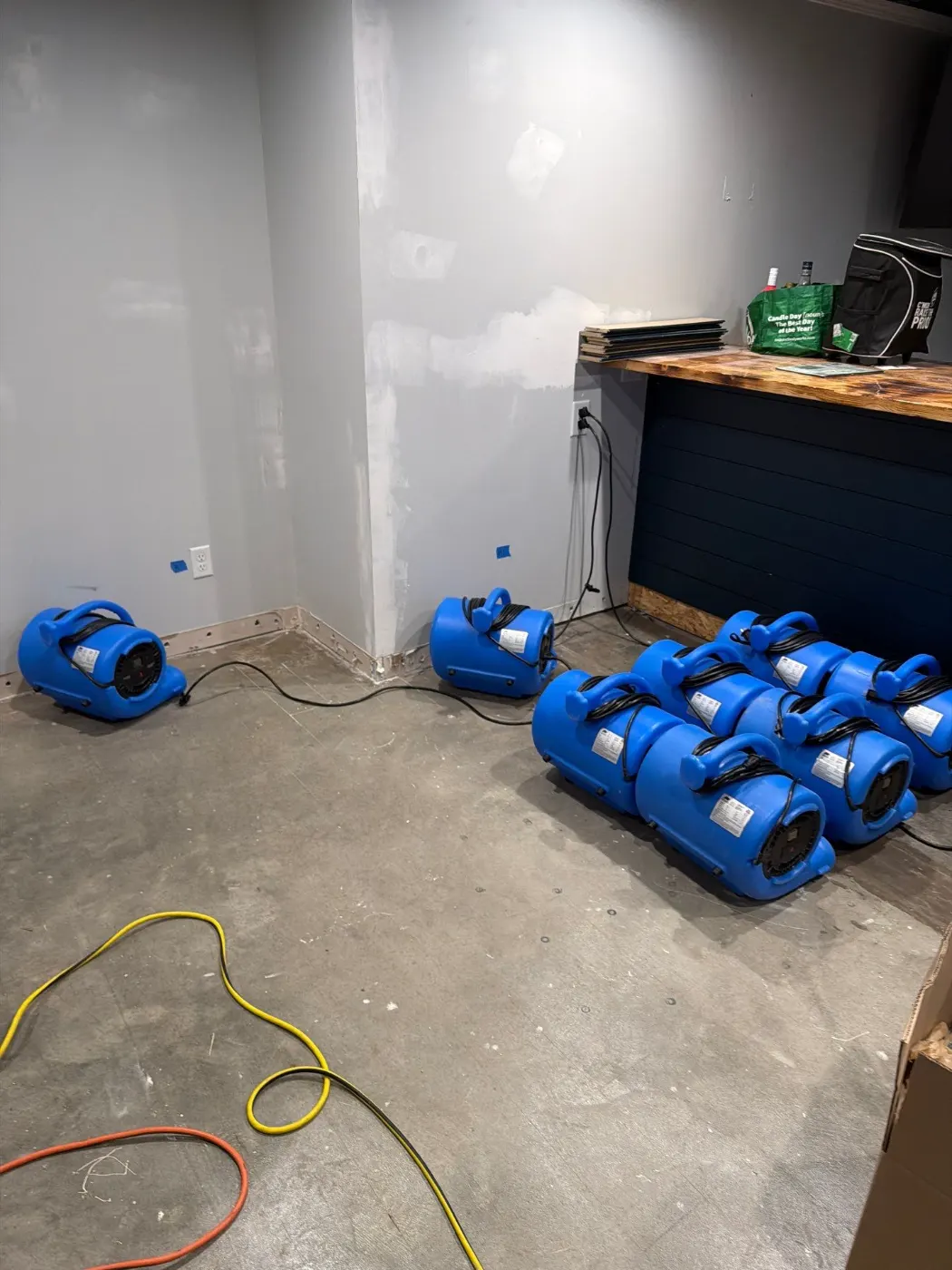
Air movers go where the mapping shows wet surfaces, and dehumidifiers get sized to the volume of the space being dried. Closed doors and poly sheeting seal off the drying area so the equipment works on the wet rooms only.
Progress Review With You
Partway through the job the technician walks the rooms with you and compares today's readings to the first day's. You hear which rooms are dry and which are lagging, and changes to the plan get approved before they happen.
Clearance Verification
Final moisture readings are taken on every affected material at the same marked locations and compared against the unaffected baseline recorded at the start. Equipment comes out once that comparison's documented, containment follows, and the verification sheet goes into your file.
Storm Damage in Ingalls
Photographs from real storm damage jobs completed by our crew in Ingalls and surrounding areas.
Storm Damage FAQ
Questions Ingalls homeowners ask us about storm damage restoration.
Guidance and Standards for Storm Damage
- The National Weather Service office in Indianapolis posts summaries of recent central Indiana storm and flood events. NWS Indianapolis Event Summaries
- The Indiana Department of Insurance advises against permanent repairs before your insurance company inspects the damage. Check your own policy for what it covers. Indiana Department of Insurance: Insurance Claim Tips
Ingalls Neighborhoods We Serve
We take storm damage calls in every part of Ingalls. Pick your neighborhood for local details.
Other Restoration Services in Ingalls
Ingalls Water Restoration handles the full scope of restoration work. Explore our other services below.
Water Damage Restoration in Ingalls
24/7 emergency response. IICRC certified water restoration from extraction to full dry out.
Learn more →Basement Flooding in Ingalls
Basement water emergencies handled fast. Extraction, drying, mold prevention.
Learn more →Sewage Cleanup in Ingalls
Category 3 biohazard cleanup. Full containment, decontamination, structural restoration.
Learn more →Request Storm Damage Restoration
Reach Us Directly
Our team is available 24/7 for emergencies and ready to schedule inspections during business hours.
Need Immediate Help?
For active water or mold emergencies, call us directly. We are available 24/7.