Problem: Water Is Still Spraying and You Cannot Find the Shutoff
The first 10 minutes of a frozen pipe burst decide how bad the damage gets. A half-inch supply line at normal household pressure pushes roughly 6 to 8 gallons per minute into your Ingalls home. In 20 minutes that is over 120 gallons soaking subfloor and joists.
Solution: Kill the Water at the Main, Then the Power
Your main shutoff is usually where the water line enters the house, often in a basement near the front wall, in a utility closet on a slab home, or outside in a buried meter box. Turn it clockwise until it stops. Open a faucet on the lowest level to drain the remaining pressure. Then shut off power to any room with standing water at the breaker panel before you step into it. If you cannot locate the main valve right now, call your water utility, they can shut service at the curb stop within the hour in most Ingalls neighborhoods. While you wait, place buckets under active drips, pull rugs and electronics out of the wet zone, and prop open closet and cabinet doors so air can start moving through enclosed spaces.
Problem: Water Is Soaking Into Walls, Ceilings, and Floors Faster Than You Can Mop
Towels and shop vacs handle puddles, not saturated assemblies. Drywall wicks water vertically about an inch per hour. Wood subfloor traps moisture under vinyl and laminate, and insulation in exterior walls holds water like a sponge against the very stud cavity where the pipe burst.
Solution: Professional Extraction and Targeted Drying
This is where extraction equipment matters. Truck-mounted units pull standing water at 100+ gallons per minute, weighted rovers compress carpet pad to lift trapped moisture, and injection drying systems push warm air into wall cavities without tearing every surface open. For deeper guidance on the removal phase, our water extraction services overview walks through what proper standing water removal looks like. After extraction, air movers and commercial dehumidifiers run for 3 to 5 days while we monitor moisture readings daily with penetrating meters. The drying plan changes based on what got wet. Hardwood floors get drying mats and edge sealing, tile over concrete needs longer dehumidification cycles, and engineered flooring often has to come up if water reached the glue layer.
Problem: You Are Worried About Mold Starting Behind the Walls
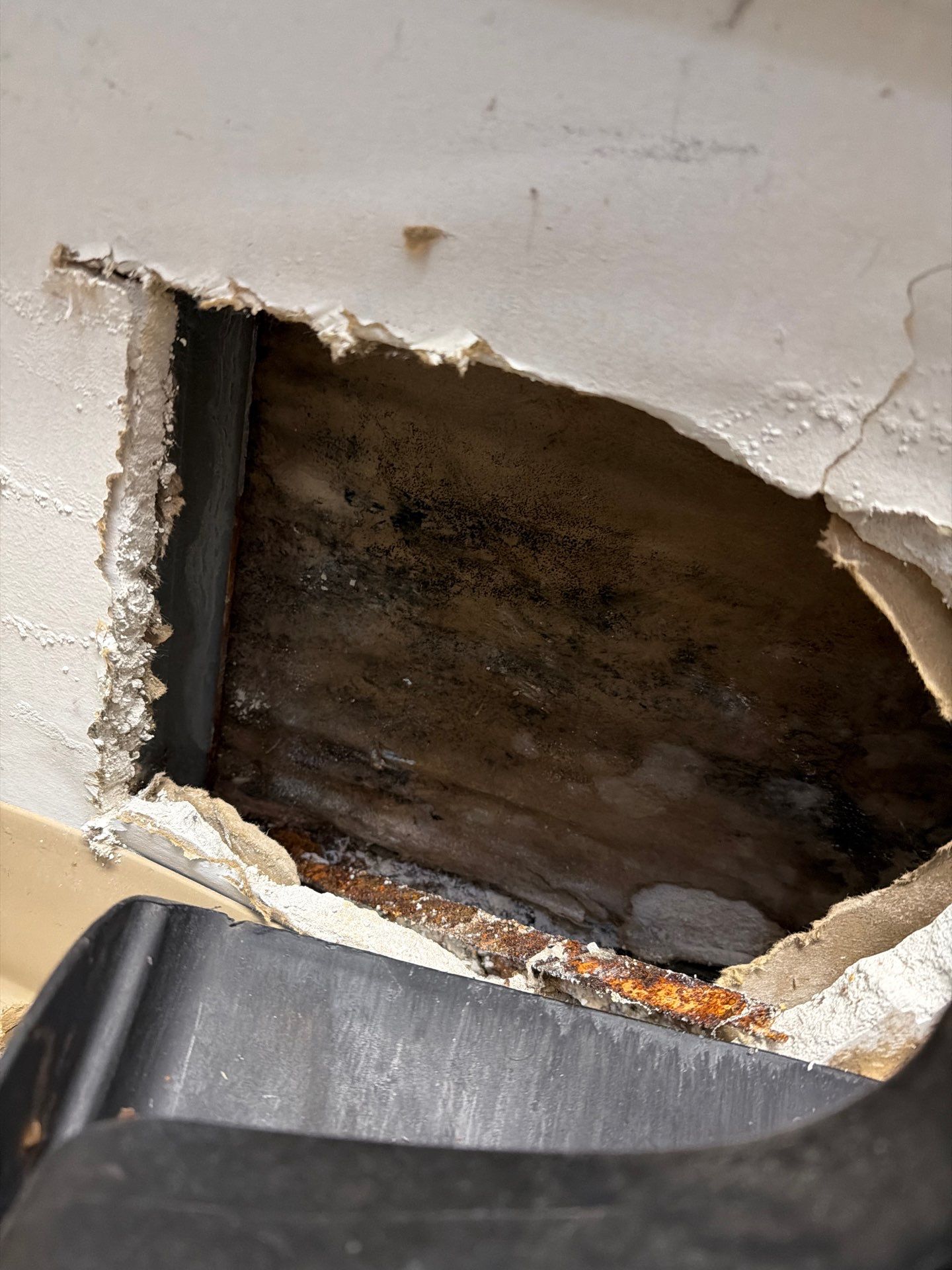
Mold colonies can begin in 24 to 48 hours on wet drywall, insulation, and wood. In winter, sealed-up homes with little ventilation make it worse, especially in finished basements where airflow is already limited.
Solution: Dry to Standard, Then Verify With Numbers
We dry materials back to the documented dry standard for your Ingalls home, usually within 4 percent of unaffected baseline readings, then apply EPA-registered antimicrobials in cavities that held standing water. Three steps we never skip:
- Final moisture readings on every affected material, logged and shared
- Containment with plastic and negative air when demo is required
- Written scope showing what was dried in place versus removed
Problem: The Damage Is Worse Than a Pipe, You Have Category 2 or Category 3 Water
If the burst happened upstream of a toilet, near a sewer stack, or sat for more than 24 to 48 hours, IICRC standards reclassify it. Category 1 (clean) water turns into Category 2 (gray) within roughly 48 hours, and contact with sewage or sitting groundwater pushes it to Category 3, which requires full removal of porous materials.
Solution: Correct Classification and Selective Demolition
Honest classification protects your health and your insurance claim. We document category, class, and affected materials before any demo, then remove only what cannot be safely dried, typically wet insulation, swollen MDF baseboards, and drywall up to the documented wet line. If the situation escalated into sewage contamination, the protocol changes again with antimicrobials and PPE.
Problem: You Do Not Know Which Pipe Burst or How Many
Frozen pipe damage often hides. You see one wet ceiling, but the actual split could be 12 feet away in an attic run, a crawlspace, or inside a kitchen soffit. In older Ingalls homes, copper, galvanized, and PEX may all be present, and freeze splits show up at the weakest point, not the coldest one.
Solution: Thermal Imaging and Pressure Testing Before Repairs
Before drywall comes out, we map the moisture footprint with infrared cameras and confirm the leak source with a licensed plumber who pressure tests the system. This avoids cutting open three rooms when the burst is in one. Common freeze locations include:
- Pipes in exterior walls on the north and west sides of the house
- Supply lines running through unheated attics, garages, or crawlspaces
- Hose bibs and laundry box connections near uninsulated rim joists
It is also common to find more than one split on the same line. When a section freezes, ice expansion can stress fittings several feet away that begin weeping only after the system is repressurized. That is why we recommend keeping the main off until the plumber has tested the full run.
Problem: You Are Not Sure What Insurance Will Cover
Most homeowner policies in Indiana cover sudden and accidental discharge from a frozen pipe, including water cleanup, drying, and repair of damaged materials. They generally do not cover the pipe itself, and they may deny the claim if the home was unoccupied without heat maintained, usually defined as 55 degrees or higher.
Solution: Document Everything and Let Us Speak Insurance
Before anything moves, take wide and close-up photos and video of every wet area, the burst location, and any damaged contents. Save the broken pipe section if possible. Ingalls Water Restoration bills insurance directly, writes Xactimate-formatted estimates, and provides daily moisture logs that adjusters expect. For a deeper look at numbers, our water damage restoration cost breakdown shows what frozen pipe jobs typically run before and after deductible. Keep receipts for any emergency purchases like fans, tarps, or a hotel stay, since most policies include loss-of-use coverage that reimburses those out-of-pocket costs.